Matt LaFleur: Career, Coaching Style, and Rise With the Packers
Matt LaFleur has become one of the NFL’s most closely watched head coaches, not because he talks loudly or courts attention, but because his teams keep winning. Since taking over as head coach of the Green Bay Packers in 2019, LaFleur has combined a modern offensive mindset with a calm, structured leadership style—producing consistent regular-season success in one of the league’s most demanding markets. His tenure has also come with intense scrutiny, as expectations in Green Bay extend well beyond winning records. This is the story of how LaFleur built his reputation, what defines his coaching philosophy, and why his legacy is still very much in progress.
Who Is Matt LaFleur?
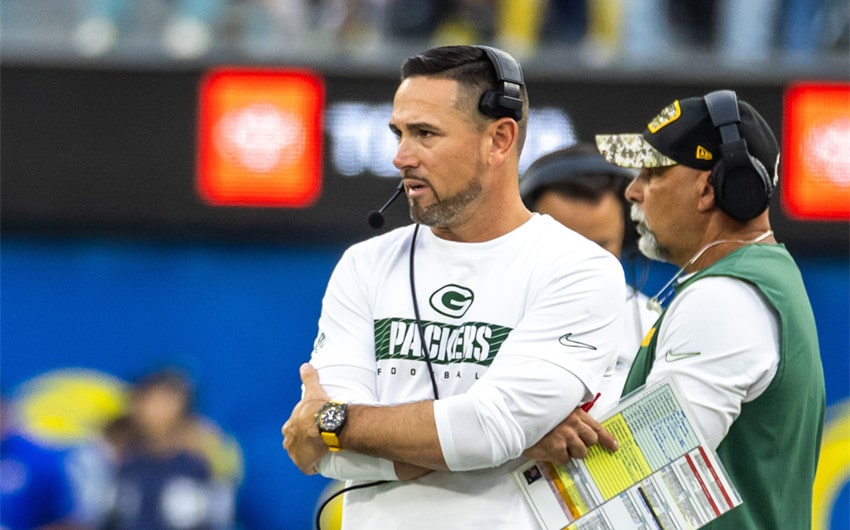
Matt LaFleur is the head coach of the Green Bay Packers, a position he has held since January 2019. He became the 15th head coach in franchise history, stepping into a role that carries more pressure than most in professional sports. Coaching the Packers means inheriting decades of success, legendary quarterbacks, and a fan base that measures seasons by championships rather than competitiveness.
LaFleur arrived with a reputation shaped by the modern NFL coaching tree, particularly those influenced by Mike Shanahan and his protégés. From the start, Green Bay framed him as a forward-thinking leader with a clear vision, not just a play-caller but a coach capable of guiding the organization through its next era.
Early Football Background
LaFleur’s football journey began in Michigan, where he grew up immersed in the sport. He played quarterback in college at Saginaw Valley State, a background that continues to influence how he sees the game. Although he never pursued a professional playing career, his time under center helped shape his understanding of offensive rhythm, timing, and decision-making.
That quarterback perspective is still evident today. LaFleur often speaks about simplifying reads, creating clarity for passers, and building offenses that help quarterbacks play fast rather than forcing constant improvisation.
Entering the Coaching Ranks
After college, LaFleur transitioned into coaching, starting at the ground level. His early career included roles as a graduate assistant and position coach at several college programs, where he worked closely with quarterbacks and receivers. These years were less about visibility and more about learning—how to teach, how to structure practice, and how to communicate effectively with players.
His move into the NFL exposed him to some of the league’s most influential offensive minds. Over time, LaFleur worked within systems tied to the Shanahan and McVay coaching lineage, which emphasized play-action, pre-snap motion, and offenses designed to stress defenses horizontally as well as vertically. Those experiences helped him develop a clear offensive identity long before he became a head coach.
By the time Green Bay hired him, LaFleur had already served as an offensive coordinator and was viewed as someone who understood both scheme and leadership.
Becoming the Packers’ Head Coach
When the Packers hired LaFleur in 2019, the move represented a shift. Green Bay was coming off an uneven stretch and was searching for a coach who could modernize the offense while maintaining the franchise’s long-standing standards.
The results were immediate. In his first three seasons, LaFleur led the Packers to 13 wins each year, an unprecedented start for a head coach. His teams were efficient, disciplined, and difficult to defend. Over his tenure through the mid-2020s, LaFleur compiled one of the NFL’s best regular-season records, establishing himself as one of the league’s most successful coaches by wins alone.
At the same time, those regular-season achievements raised expectations even further. In Green Bay, success is judged most harshly in January.
Coaching Style and Philosophy
LaFleur’s offensive philosophy reflects modern NFL principles, but it’s not built solely on complexity. At its core, his system is about cohesion. The run and pass are designed to look alike, forcing defenses to hesitate. Motion is used to reveal coverages and create leverage, not just for show.
He places a heavy emphasis on timing and spacing, designing plays that give quarterbacks clear reads and defined answers. Rather than relying on constant heroics, LaFleur’s offenses aim to stay on schedule, limit negative plays, and control the flow of the game.
Equally important is his leadership approach. LaFleur is often described as organized, even-tempered, and collaborative. He prioritizes communication with players and staff, believing that trust and clarity lead to better execution. That demeanor has helped him manage both veteran leaders and younger players across changing rosters.
Measuring Success in Green Bay
Statistically, LaFleur’s tenure stands out. Few coaches in NFL history have matched his early winning percentage. Division titles, playoff appearances, and consistent contention have defined his regular seasons.
Yet the same consistency has fueled criticism. Playoff losses have drawn scrutiny, particularly when the Packers entered the postseason as favorites. In Green Bay, sustained excellence is expected—but championships are the ultimate currency.
That tension defines much of the conversation around LaFleur. Supporters point to his ability to keep the Packers competitive through roster changes and quarterback transitions. Critics argue that postseason breakthroughs remain the missing piece.
Managing Change and Quarterback Transitions
One of LaFleur’s greatest challenges has been navigating change at the quarterback position. Coaching in Green Bay often means being measured by how well you manage elite quarterbacks—and what happens after them.
LaFleur’s role in guiding the team through this transition has tested both his adaptability and leadership. It has required recalibrating the offense, managing expectations, and maintaining confidence inside the locker room. Those moments, more than any individual play call, shape how head coaches are ultimately judged.
Handling Criticism and Pressure
Coaching the Packers means constant scrutiny. Late-season losses, playoff exits, or even short winning streaks can shift the narrative quickly. LaFleur has faced those moments with a consistent approach, rarely becoming reactive in public and instead focusing on internal evaluation and adjustment.
That composure has become part of his identity. Whether praised or questioned, he tends to project stability—a trait that matters when leading a team through adversity.
Influence on the Modern NFL
LaFleur’s impact extends beyond Green Bay. His offensive concepts align with trends that have reshaped the league, and his success has reinforced the value of system-based offense paired with strong leadership. As assistants move on and other teams study his approach, his influence continues to ripple outward.
He represents a generation of coaches who balance innovation with structure, creativity with discipline.