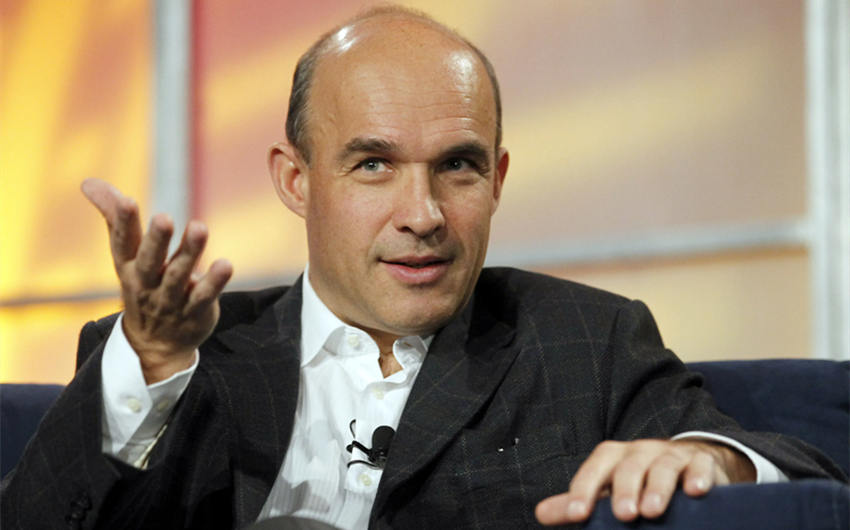
Jim Balsillie Net Worth And Legacy BlackBerry Billionaire Philanthropy And Policy Work
Jim Balsillie is one of those rare business figures whose name is tied to a whole era of technology—then, after the spotlight faded, he stayed influential in a completely different way. You might know him from BlackBerry, but his story also includes big bets on Canadian innovation, serious philanthropy, and outspoken work on data rights and intellectual property. Here’s a full, human-friendly look at who he is, what he built, and why he still matters today.
Quick Facts About Jim Balsillie
- Full Name: James Laurence Balsillie
- Born: February 3, 1961
- Known For: Former co-CEO and chair of Research In Motion (RIM), the company behind BlackBerry
- Background: Business leader with deep interest in innovation strategy and policy
- Later Focus: Technology policy, digital governance, research, and philanthropy
- Estimated Net Worth (2026): Commonly estimated around $800 million to $1.2 billion (varies by source and market conditions)
Who Is Jim Balsillie
Jim Balsillie is a Canadian businessman and philanthropist best known for helping turn BlackBerry into a global phenomenon. During BlackBerry’s peak, the device wasn’t just popular—it was the symbol of modern work life. If you were in government, finance, law, media, or corporate leadership, chances are you either had a BlackBerry or desperately wanted one.
What makes Balsillie interesting is that he didn’t disappear into quiet retirement after leaving BlackBerry. Instead, he shifted into “big picture” work: pushing Canada to take intellectual property seriously, warning about the societal costs of data exploitation, and funding institutions focused on global governance and research.
Jim Balsillie Net Worth In 2026 An Estimated Range
Jim Balsillie’s net worth in 2026 is typically discussed in the high nine-figure to low ten-figure range. A reasonable estimate is:
Estimated net worth (2026): $800 million to $1.2 billion.
This range is an estimate, not a confirmed disclosure. Net worth calculations vary because they depend on private investments, real estate, remaining equity interests, and how different outlets interpret public information. It’s also important to remember that founders’ “paper wealth” can swing dramatically with markets—especially when a large portion of their story involves a once-dominant tech company that later declined.
But the more useful question isn’t just “What’s the number?” It’s: How did he build wealth, what did he do with it, and what impact did he choose to chase?
How He Made His Money The Rise Of BlackBerry
Balsillie’s wealth is inseparable from Research In Motion (RIM), the company that created BlackBerry. RIM didn’t win because it was flashy. It won because it solved a painful problem: secure, reliable mobile communication for professionals who needed to stay connected.
BlackBerry became the gold standard in a few key ways:
- Push email: Messages arrived automatically, which felt revolutionary at the time.
- Security: Enterprises and governments trusted BlackBerry’s encryption and infrastructure.
- Keyboard efficiency: The physical keyboard made high-volume messaging fast and comfortable.
- Network advantage: The broader system behind BlackBerry mattered as much as the device itself.
During BlackBerry’s peak years, the company’s growth made its leadership incredibly wealthy. For founders and top executives, the big wealth driver is usually equity—your stake rises as the company’s valuation rises.
What He Did At RIM Beyond Being “The Business Guy”
Balsillie is often described as the business counterpart to the engineering-heavy leadership that powered RIM. In simple terms, he helped turn technology into a global enterprise. That means negotiating partnerships, pushing expansion, building enterprise relationships, and navigating the high-stakes world of telecom carriers and international markets.
When a tech company scales worldwide, the hardest challenges aren’t only technical. They’re also commercial and political: market access, distribution, regulatory issues, and big strategic decisions made before the future is obvious.
For a long time, those decisions worked. BlackBerry didn’t merely compete—it defined the category.
When The Smartphone World Changed And BlackBerry Fell Behind
BlackBerry’s decline is often reduced to one idea—“they missed the iPhone moment”—but the real shift was broader. The market moved from a secure communication device to a pocket computer powered by apps, touchscreens, and consumer-first experiences.
Several forces hit at once:
- App ecosystems became the battleground: Developers and app stores reshaped loyalty.
- Touch interfaces changed expectations: People wanted bigger screens and different inputs.
- Consumer features mattered more: Cameras, entertainment, and seamless multimedia became central.
- Speed of iteration increased: Competition moved faster and repositioned quickly.
BlackBerry still had strengths, but the “center of gravity” in mobile shifted. That matters for net worth too: much of a founder’s wealth can be tied to a company’s market value, and when that value changes, so does the public perception of the founder’s fortune.
His Post-BlackBerry Chapter Innovation Policy And Intellectual Property
After leaving BlackBerry, Balsillie became an unusually vocal figure on innovation strategy—especially the idea that countries can’t compete globally if they create great technology but fail to protect or own the intellectual property behind it.
In practical terms, he’s pushed themes like:
- Owning IP, not just creating it: Patents, licensing, and defensible innovation strategy
- Building national capacity: Talent pipelines, research institutions, and scaling support
- Smarter tech policy: Updating governance for a digital, data-driven world
This is a different kind of influence than running a company. It’s slower, more structural, and often less glamorous. But it’s arguably more lasting if it changes how a country competes.
Philanthropy And Institution Building The “Long Game” Wealth Choice
Some wealthy tech leaders invest mostly in more companies. Others invest in institutions that shape research, policy, and education for decades. Balsillie has strongly leaned into institution-building.
He has been connected with major philanthropic efforts and organizations that focus on governance, international affairs, and research. The main point isn’t the names on buildings—it’s the strategy: build places where talent gathers, ideas mature, and long-term national capability grows.
That approach can quietly reshape a region’s influence. Instead of asking, “What startup will be big next year?” it asks, “What ecosystem will be strong in 20 years?”
Why People Still Debate Him
Balsillie is respected by many as a builder who helped put Canadian tech on the map. He’s also a polarizing figure in some circles because he’s outspoken, ambitious, and willing to challenge mainstream assumptions about tech power and governance.
When someone speaks loudly about data rights, platform power, and national innovation strategy, reactions tend to split:
- Supporters see a rare leader pushing for long-term sovereignty and smarter policy.
- Critics may see his ideas as too aggressive, too political, or too idealistic.
Either way, the debate itself is part of his impact. You don’t spark that kind of conversation unless you’re influencing the direction of the room.
The NHL Team Attempts A Different Kind Of Ambition
Another well-known part of Balsillie’s public story is his attempt to bring an NHL team to Hamilton, Ontario. This wasn’t a small, casual interest—it was a serious pursuit tied to his belief that the region could support a franchise.
Even though it didn’t work out, it showed something consistent about him: he tends to think in big systems—markets, regions, institutions—not just products.
What His Story Teaches You About Wealth And Influence
If you zoom out, Jim Balsillie’s story is a masterclass in how wealth and influence can diverge. You can make massive money in one era, then spend the next chapter trying to shape rules, institutions, and long-term strategies.
- Timing matters: BlackBerry hit the right need at the right moment—then the market moved.
- Equity creates real wealth: Founders build fortunes through ownership, not just salary.
- Tech leadership isn’t permanent: Category winners can fade fast when platforms change.
- Influence can outlast business dominance: Policy, research, and philanthropy can keep a leader relevant.
- Legacy is a choice: Some chase the next product. Others build the institutions that outlive products.
Bottom Line
Jim Balsillie’s estimated net worth in 2026 is commonly placed around $800 million to $1.2 billion, built largely from BlackBerry’s rise and what he retained and invested afterward. But the more compelling story is what he did with his platform: pushing innovation strategy, advocating for stronger digital governance, and funding long-term institutions that aim to strengthen Canada’s role in a rapidly changing world.
Featured image source: https://www.bloomberg.com/news/articles/2025-12-09/ex-blackberry-ceo-urges-canada-to-shield-itself-from-trump-doctrine